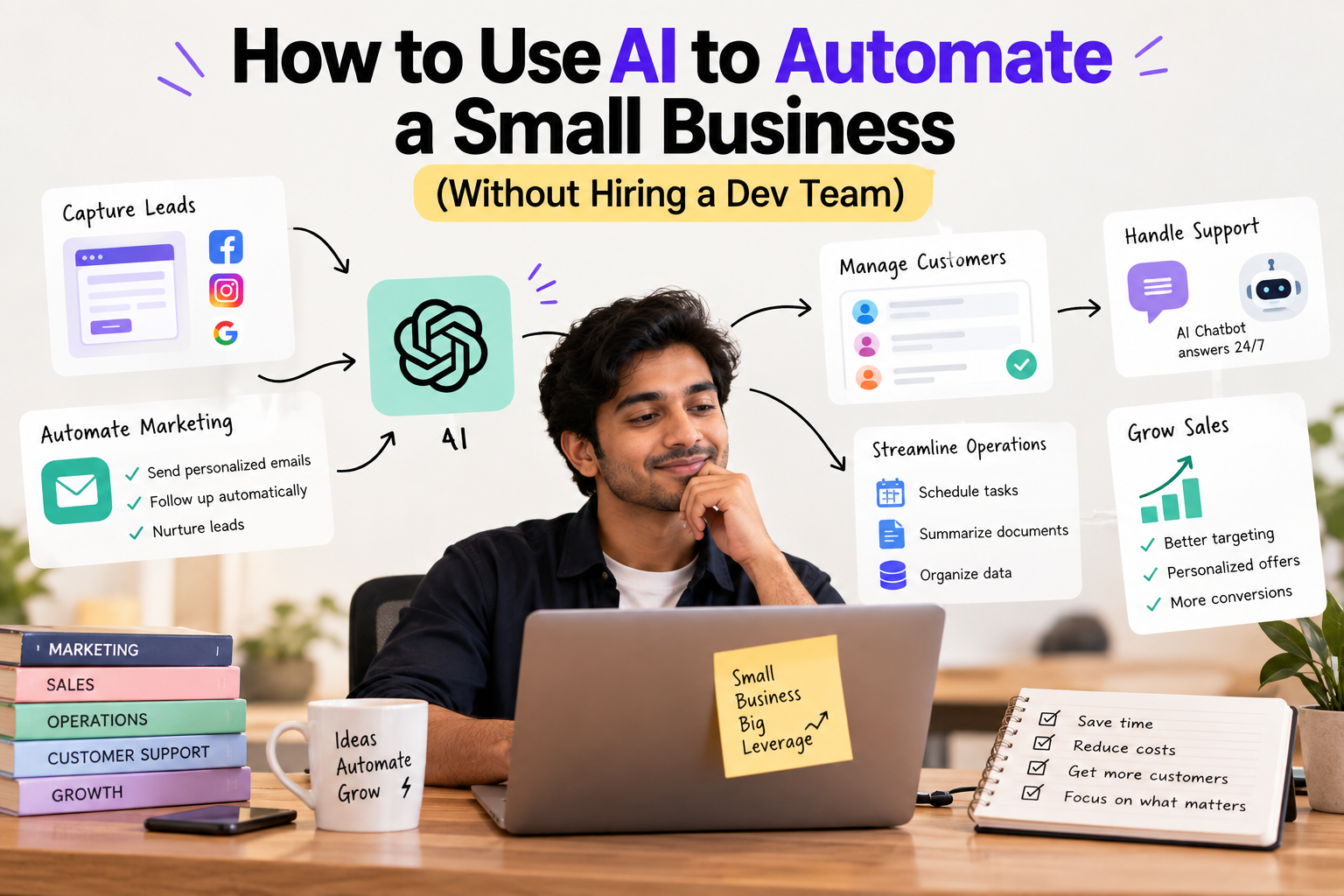
Start with one event and one useful result. This guide explains the implementation steps using a lead enquiry as an illustrative example. It does not assume that every small business needs a custom agent.
What does AI workflow automation mean?
AI workflow triggers and actions connect an event to a business result. A form arrives, a model extracts useful information and software prepares a checked CRM record. The model is one component in the process.
Six building blocks
- 1. Trigger the workflow: Use a form event, webhook or scheduled check. Record a stable event identifier so the same request does not create duplicate records.
- 2. Extract structured fields: Structured JSON makes fields easier to validate. Preserve unknown values rather than inventing them.
- 3. Retrieve approved information: RAG retrieves relevant company material before drafting. Keep policies current and enforce access boundaries.
- 4. Call limited tools: Expose narrow operations. Authorize the caller and validate arguments in application code without granting unrestricted shell or DB access.
- 5. Review consequential actions: Begin with a draft queue. Require approval for messages, financial actions or sensitive records.
- 6. Monitor the completed task: Log outcomes, errors, latency and usage. Set spend limits and a route for failed tasks.
Build an AI lead qualification workflow
Receive the form, validate contact fields, check for an existing record and extract the stated need. Apply documented routing rules. Prepare a reply and show the source enquiry to the reviewer before saving or sending the approved result.
Test missing fields, duplicate submissions, invalid addresses and unavailable CRM access. Compare total handling time, including review, with the previous process.
Frequently Asked Questions
How can a small business start using AI automation?
Choose one repeatable task and define its trigger, required data and expected result. Build a draft or review stage before granting write permissions. Test ordinary and difficult examples, then measure the full handling time and error rate so you can decide whether the workflow improves the existing process.
Is valid JSON enough to trust an AI output?
No. Valid JSON shows that the output has the expected structure, but a field can still contain an incorrect name, amount or decision. Check source evidence and apply business rules before using the values. Missing, contradictory or consequential information should follow a defined review path instead of automatic execution.
What is RAG in a small business workflow?
Retrieval-augmented generation supplies relevant documents or records to a model before it prepares an answer. A support workflow might retrieve the current returns policy. The system still needs access controls, source checks and an escalation path because retrieved information can be outdated, incomplete or interpreted incorrectly by the model.
What costs should be tracked during a pilot?
Track model usage, orchestration, hosting, third-party services and human review time. Include retries and correction work, which can make a cheap individual request expensive in practice. Calculate cost per successfully completed task and compare it with the existing process before increasing volume or adding more automated actions.